 admin
adminAcross modern society—from bustling traffic arteries to quiet streets at dawn—the seemingly simple reflective vest plays a crucial role in safety protection, leveraging scientific optical principles and ergonomic design. Requirements for reflective vests vary depending on the work environment and risk level; selecting and using the right vest can serve as a vital shield for saving lives in critical moments.
1. High-Risk Roadwork Scenarios
Personnel involved in road construction, accident response, or maintenance on high-speed routes—such as expressways and national highways—face an extreme risk of vehicle collisions. In these settings, reflective vests must provide all-around, long-range visibility. High-visibility warning garments meeting national Class 3 standards are the norm; these require extensive coverage of reflective material to create a striking silhouette visible from hundreds of meters away under vehicle headlights, giving drivers ample warning time and reaction distance. Typically featuring a fluorescent yellow or orange base color combined with wide reflective strips, these vests ensure clear visibility from the front, back, and sides.
2. General Outdoor Work and Logistics Scenarios
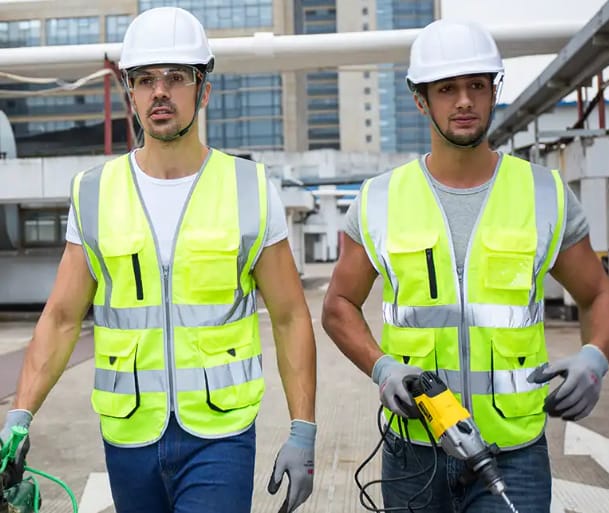
In environments such as construction sites, municipal maintenance, and logistics operations, vehicle speeds are generally lower, yet work zones frequently overlap with moving machinery and traffic. Reflective vests here prioritize ease of movement and targeted, high-visibility warnings. Class 2 or Class 1 garments are common, with reflective strips strategically placed on key areas of movement like the torso, cuffs, and trouser legs. For logistics personnel handling night-time loading and unloading, these vests not only protect the wearer but also allow forklift and truck drivers to accurately locate personnel, preventing accidents caused by blind spots. Designs often emphasize breathability and durability to accommodate long hours of wear and complex physical tasks.
3. Public Service and Public Safety Scenarios
Sanitation workers starting their shifts at dawn, community security guards on night patrol, and traffic assistants on duty at intersections all share a common trait: they perform routine, mobile tasks in public areas with low-to-moderate risk. The reflective vests provided for them must balance basic warning functions with lightweight comfort, breathability, and clear professional identification. Many such reflective garments incorporate organizational logos or functional labels, serving the dual purpose of ensuring safety and projecting a professional image. Particularly in adverse weather conditions—such as rain, snow, or fog—these garments effectively compensate for reduced natural visibility, ensuring the continuity of essential public services and the safety of personnel.
4. Specialized Environments and Emergency Rescue Scenarios
Environments such as firefighting, disaster relief, and traffic accident response are often characterized by complex lighting, urgent conditions, and high levels of uncertainty. Reflective gear used in these scenarios demands the highest specifications; beyond meeting top-tier visibility standards, the garments must possess additional properties such as fire resistance, waterproofing, antistatic capabilities, and high abrasion resistance. Different colors and styles also serve to distinguish roles on-site—commanders, emergency medical personnel, and engineering rescue teams can be identified by the color of their gear or the pattern of the reflective strips, a distinction that is crucial in time-critical rescue operations.
5. Personal Commuting and Outdoor Activities
As safety awareness grows, reflective gear is transitioning from professional protective equipment to everyday consumer use. An increasing number of night runners, cycling commuters, and students—on their way to and from school—are opting for reflective vests, armbands, or backpacks featuring reflective materials. While such consumer-grade gear need not meet industrial standards, its lightweight, portable, and diverse designs allow safety protection to integrate seamlessly into daily life. When illuminated by vehicle headlights, these reflective accessories significantly enhance personal visibility on the road, representing a highly cost-effective investment in proactive safety.
