 admin
adminReflective vests utilize specialized optical materials to achieve retro-reflection, directing over 85% of incident light back to the source at night—the core principle behind enhancing the wearer’s visibility. As a form of passive safety gear, these vests require no power source, relying instead on their physical structure to provide a warning function.
Reflective materials typically consist of a base layer of glass microbeads or prismatic arrays, topped with a metallic coating. When light strikes the material, the glass microbeads create a path of refraction, reflection, and re-refraction, ultimately returning the light along its original path of incidence. This retro-reflective effect allows observers (such as drivers) to clearly identify the wearer when illuminated by vehicle headlights, extending the effective visibility range to six to eight times that of ordinary clothing.
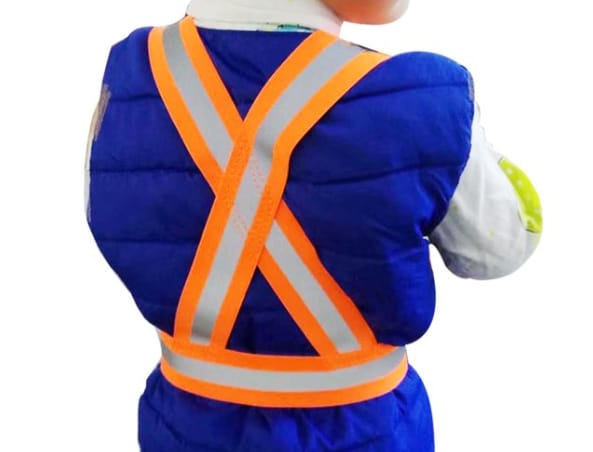
Industry standards categorize reflective performance into three grades—engineering grade, high-intensity grade, and diamond grade—based on differences in reflectivity and durability. Reflective vests for children generally utilize high-intensity grade materials, balancing safety with comfort. An elastic vest design ensures freedom of movement while keeping the reflective strips positioned on the torso, where they are most easily seen.
In practical use, the protective effectiveness of a reflective vest depends on ambient lighting, how it is worn, and the cleanliness of the material. In scenarios such as roadwork or students commuting to and from school, proper wear—ensuring the reflective strips remain unobstructed—is crucial. Advances in material technology have led to products that retain over 70% of their reflectivity even after 50 wash cycles, effectively addressing the durability issues associated with traditional reflective materials.
