 admin
adminIn high-risk environments such as construction sites and traffic control zones, the visibility of reflective vests is a critical performance metric. However, in practical application, users often overlook the interplay between mesh density, the coefficient of retroreflection, and temperature resistance—factors that collectively determine the vest’s actual protective performance under varying lighting and temperature conditions.
Analysis of Working Principles and Core Structure
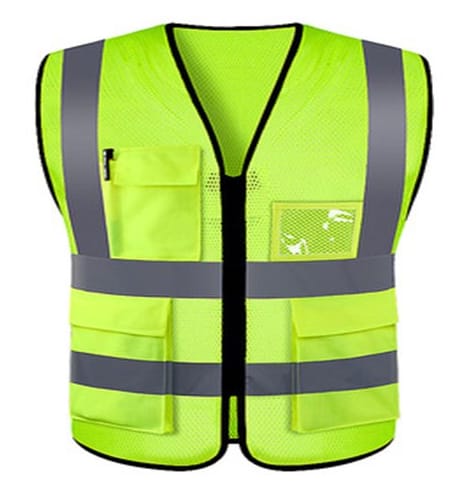
A 150D mesh density forms the foundational support layer, providing breathability and tear resistance as the first line of physical protection. Micro-prismatic reflective strips—featuring a coefficient of retroreflection of ≥330 cd/(lx·m²)—utilize optical retroreflection principles to return incident light along its original path. Compared to traditional glass-bead coatings, this design maintains over 80% of its reflective efficiency even in rainy or foggy conditions. A temperature tolerance range of -30°C to +60°C indicates that the PVC substrate has undergone plasticization modification, preventing issues such as low-temperature embrittlement or high-temperature deformation that could cause reflective elements to detach.
How Technical Differences Affect Practical Application
Differences between mesh structures and woven fabrics directly impact heat dissipation: “peach-shaped” mesh patterns offer approximately 40% more airflow area than plain weaves, making them better suited for prolonged outdoor work. Stitching points associated with multi-pocket designs can compromise the continuity of reflective strips; this explains why vests used by designated drivers typically feature a single-pocket layout at the waist. Variations in dye adhesion to polyester fibers mean that orange vests are more prone to fading after frequent washing compared to green ones.
Application Scenarios and Evaluation Framework
Evaluations should focus on three dimensions: 1) selecting the appropriate retroreflection coefficient threshold based on ambient lighting conditions; 2) prioritizing the balance between mesh structure and garment length for scenarios involving frequent movement; and 3) inspecting seam binding techniques in environments prone to chemical corrosion. For winter construction scenarios, temperatures below -20°C can increase the stiffness of standard PVC materials by 30%; in such cases, users should verify the manufacturer’s low-temperature flexibility test reports.
